
The military of ancient Rome was a crucial factor in Rome’s development from a small settlement on the Italian peninsula to one of the largest and most long-lasting empires ever created.
The Roman Army, or exercitus Romanus as they called themselves, was the terrestrial forces of Rome, active in the Roman Kingdom, through the Roman Republic and in the Roman Empire. After the collapse of West Rome, the Roman Army of East Rome continued as the Eastern Roman Army, eventually becoming the Byzantine Army. This is a period that spans over 2,200 years, from 753 BC to 1453 AD.
During this long stretch of history, the Roman Army did of course undergo numerous changes, impacting factors such as recruitment, payment, equipment, clothes and organization, while at the same time conserving many core traditions and habits.
The Roman Army campaigned as far north as Britannia (up to modern-day southern Scotland), as far south as northern Africa (modern-day Tunisia and Egypt), as far west as the Iberian Peninsula, and as far east as Parthia (modern-day Iran).
In its early history, the Roman military was a citizen military of soldiers that were paid no salary and had to provide their own equipment. Eventually, the army transformed into a professional army, which then gradually also became less and less Roman and more foreign as it recruited mercenaries from outside the Roman heartlands.
The Gladius Sword
The gladius is the short sword most people immediately picture when they think of Roman soldiers. It was a compact, lethal weapon designed for close-quarters fighting and for use inside disciplined formations. Over time, it became an emblem of Roman military practice and identity.
After the the consulships of Gaius Marius (the Marian reforms), a fully equipped Roman legionary would carry a gladius, one or two pila (heavy javelins), a scutum (shield), and often also a pugio (dagger). In the later empire, plumbatae (darts) were often included as well.
In this article, we will follow the gladius from its Celtic-Iberian roots through its development into recognizable Roman types, describes how it was actually used in the legionary system, and considers its broader symbolic and social roles in Roman life. We will also look at how it was gradually superseded by other swords, including the spatha.
Origins and early adoption of the gladius
The Roman gladius did not arise in a vacuum. Its immediate ancestor was the Iberian short sword, a robust, pointed blade used by Celtiberian fighters encountered by Rome during the Republic’s campaigns in the western Mediterranean. Roman troops fighting in Hispania observed the effectiveness of a compact, thrusting weapon suited to the mêlée and adopted similar designs. By the second and first centuries BCE, the Roman field sword had taken on features that distinguish the gladius from earlier Roman blades: a comparatively short blade length, broad shoulders near the hilt, and a pronounced, stabbing point. This initial adoption reflected tactical needs.
Archaeology and iconography show an evolution of the gladius rather than a single fixed model. Early Roman swords retained traces of earlier Italic styles, then gradually took on distinct morphologies named by modern scholars after characteristic finds. There is for instance the long, pointed Hispaniensis form associated with early Republican armies, the broader Mainz type that comes with a more triangular point, and the transitional Fulham type that has been found in northern Europe. We also know of a later, stubby Pompeii type which appears in many early Imperial depictions. These changes were incremental responses to battlefield experience, manufacture, and shifting tactical emphasis rather than the result of a single standardizing decree.
The tactical needs that the gladius was suited for in this early context (2nd–1st centuries BCE) were closely linked to how Roman armies fought in close-quarters combat, especially after their encounters with Iberian and Celtiberian fighters. Roman legions typically fought in tight, disciplined formations (such as the maniple), and a short, compact sword was easier to wield in crowded conditions, where swinging a long sword or slashing weapon was difficult. The gladius allowed soldiers to thrust between shields, maximizing effectiveness in a dense formation. The gladius had a pronounced, sharp point, designed for stabbing rather than cutting. A thrust was more lethal in close combat, could penetrate armor or chain mail, and was safer for the wielder in a shield wall, since swinging wide could expose the soldier.
The Roman soldiers used large scutum shields, often overlapping to form a tight shield wall, and the gladius’ short blade allowed soldiers to strike around or under the shield without leaving themselves open. This paired effectively with pila throws, which disrupted enemy defenses and opened opportunities for stabbing attacks. (The Roman soldiers would throw their pila, i.e. their heavy javelins, at the enemy before engaging in close combat.)
Notably, the gladius’ broad shoulders near the hilt gave extra strength for thrusts in heavy, prolonged combat, and the sword could be used repeatedly in the line of battle, unlike longer, more fragile swords or slashing weapons.
Last but not least, a short short is easier to carry on campaigns compared to a longer sword, and this was especially important as soldiers were expected to march carrying a full kit comprised of one or two pila (heavy javelins), gladius, shield, and armor.
Design, dimensions and manufacture
A working gladius combined a blade optimized for the thrust with a handle that offered control in the crush of close combat. Typical blade lengths vary by type and period, but a common range for the blade would be on the order of 45 to 60 centimeters, with a total weapon length rarely exceeding 80 centimeters. The cross-section and point geometry were chosen to produce a deep, disabling thrust rather than an extended cutting arc. Weight was modest by ancient standards. The gladius was light enough to wield in a shield arm’s close quarters, but still heavy enough to deliver forceful penetration.
Manufacture was both artisan and, increasingly over time, industrial. Early blades show regional smithing traits. Later, under an imperial logistics regime, production became more standardized, with specialized smiths and workshops supplying equipment at scale.
Ironworking techniques of the period allowed reasonably hard cutting edges and resilient bodies. Pattern welding appears in some examples, and hilt construction often combined organic materials such as wood, bone, or horn with metal fittings. Scabbards were typically made of wood with leather and metal mounts, and decorative fittings could mark rank or unit identity, though the legionary standard issue tended toward functional plainness.
Tactical role and fighting technique
In the Roman tactical system the gladius was paired with the scutum, the large rectangular shield, and the pilum, the heavy throwing spear (javelin). The classical legionary sequence was to throw pila to disrupt an enemy formation, close with shields up, and then use the gladius in a series of short forward thrusts and controlled stabs. As explained above, the physics of a shield wall and the geometry of Roman formation fighting made slashing with a long blade both awkward and inferior, and the shorter gladius permitted an efficient, powerful stab into the unprotected torso during shield-to-shield contact. Training reinforced the technique. Legionaries practiced controlled approaches, with coordinated steps and stabbing motions. Individual action complemented the unit’s cohesion.
The gladius excelled inside the compact spacing of Roman maniples and later cohorts, and it also proved effective in the narrow lanes of sieges, and in close urban fighting where long swords were unwieldy. The gladius was a purpose-designed weapon integrated into an entire doctrine of arms, armor and teamwork.
Social and cultural significance
Beyond its battlefield function, the gladius carried symbolic weight. To centuries of Romans, the short sword signaled the professional soldier and the values of discipline and control those soldiers embodied. In literature and in funerary contexts, the military sword often appears as part of a soldier’s kit in death, a marker of career and honor.
Did you know that the Latin word for swordsman, gladiator, derives from gladius? The term underscores how pervasive the sword’s image was in Roman cultural imagination. Gladiators themselves used a range of weapons and styles, but the linguistic connection is telling: the gladius was the archetypal weapon of Roman martial identity and spectacle alike.
Within the Roman military hierarchy, variations in armament could be used to reflect variations in status. Centurions and higher officers sometimes carried differently constructed or more ornate swords and daggers, and later on, cavalrymen increasingly adopted longer swords (the spatha) better suited to fighting on horseback. Still, for the ordinary legionary, the gladius remained a practical badge of office, and a soldier’s competence was measured by his ability to use it in formation and in the most testing close engagements.
Archaeological evidence and iconography
Our knowledge of the gladius comes from a mix of preserved blades recovered from bogs, graves and battlefield sites, from Roman military tombstones, and from the rich river of surviving sculptural and pictorial evidence, including reliefs, monuments, and frescoes showing legionaries. Finds from Pompeii and from burial contexts in the Rhineland have been especially informative, giving modern scholars distinct typological markers that help place a particular blade in a chronological sequence. Literary sources supply complementary testimony about use and reputation.
Several notable archaeological finds of Roman gladii are from environments where anaerobic conditions prevented the sword from rusting, such as bogs, rivers, and lakes. Roman soldiers often lost weapons in rivers during campaigns, and gladii have been recovered from rivers in Germany, France, and Britain, where waterlogged conditions have preserved the iron blades, and sometimes even kept wooden hilts intact.
Examples of gladius types
The five main types of Roman gladius found in archaeology show the evolution of the weapon and its adaptation to Roman military tactics. Together, these types illustrate the shift from early, versatile Iberian blades to highly specialized Roman thrusting swords adapted for disciplined formation fighting.
- The Spanish or Iberian type represents the pre-Roman short swords that inspired the Romans to start using similar weapons. They were compact, pointed, and strong, designed for close-quarter combat, and their design elements were incorporated into Roman gladii as the legions refined their standard weapons.
- The Hispaniensis gladius was based on Iberian short swords encountered by the Roman army in Hispania. It had a robust, pointed blade suited to the mêlée, combining cutting and thrusting capabilities. The Hispaniensis gladius is the direct ancestor of the Mainz type gladius.
- The Mainz type gladius, used primarily in the late Republic, had a relatively long, broad blade with prominent shoulders near the hilt and a pointed tip designed for powerful thrusts in close combat.
- The Pompeii type gladius, common in the early Imperial period, featured a slightly shorter, narrower blade with a more triangular point, optimized for stabbing while maintaining agility behind the shield wall.
- The Fulham type gladius, mostly found in Britain, had a slender, elongated blade with a sharp point, reflecting local variations and the influence of Roman design on provincial armies.
The Mainz type gladius
The Mainz type gladii are named after the modern-day city of Mainz in Western Germany, an area where notable examples of this type of sword have been found. The blade is 50-55 cm long, the shoulders are broad near the hilt, and the tip is pointed. The Mainz gladii hail from circa the 1st century BCE – 1st century CE.
Mogontiacum was a Roman military base founded on the River Rhine around 13-12 BCE, in the place where we today find the city Mainz. Mogontiacum served as a legionary fortress and provincial administrative center in the Roman province of Germania Superior, and was strategically important for controlling the Rhine frontier and launching campaigns into Germanic territories. The Mainz type gladius was standard for legions stations in the area in the late Republic and early Imperial period.
Archaeologists have uncovered several gladii of this type in different contexts, including river deposits, military sites, and hoards in Germania. What defines the Mainz type is a specific set of design features: a relatively long blade, broad shoulders near the hilt, and a sharp, thrusting point suitable for close combat.
The Pompeii type gladius
The Pompeii-type gladius is one of the best-known Roman short swords and represents the standard infantry weapon of the early Imperial army. The Pompeii-type gladius provides valuable insight into how the Roman army balanced efficiency, standardization, and symbolic power at the height of the Empire.
Named after examples recovered from Pompeii and nearby sites, this form of gladius was in use roughly from the mid–1st century CE through the early 2nd century CE, overlapping with the final years before the catastrophic eruption of Vesuvius in 79 CE. The sudden burial of Pompeii preserved military equipment in a relatively undisturbed context, offering a snapshot of what Roman soldiers actually carried in daily garrison life.
In terms of design, the blade is straight, relatively short (usually around 45 to 55 centimeters), and parallel-sided for most of its length, tapering to a sharp point. This shape made it equally effective for thrusting and cutting, though Roman training emphasized the thrust as the most lethal and disciplined technique. The hilt was typically made of wood, sometimes bone, and shaped to provide a secure grip, with a rounded pommel and guard. The scabbard was worn on the right side by legionaries to keep the sword clear of the shield.
Compared to earlier types such as the Mainz gladius, which had a more pronounced waist and longer point, the Pompeii type gladius is simpler and more uniform, suggesting mass production for a professional standing army. Surviving examples are often plain, but this simplicity reflects function rather than lack of craftsmanship. It is also important to remember that organic materials like wood and leather rarely survive well archaeologically, so what we see is usually only part of the original weapon. The scabbard, now often lost or fragmentary, would have been an important visual element, sometimes decorated with tin, bronze, or silver fittings.
The discovery of gladii in a barracks context at Pompeii indicates that soldiers stationed in or near the city were equipped in the same way as legions on campaign, reinforcing the idea that Roman military identity was maintained even during routine garrison duties. The gladius was not merely a tool of war but a symbol of Roman authority and discipline, inseparable from the soldier’s daily life.
Fulham gladii
The Fulham gladii, sometimes considered a subcategory of the Mainz-type and labelled Mainz-Fulham gladii, were used after Aulus Plautius invasion of Britain in 43 CE, and remained in use until the end of the 1st century CE. The blade is 50-55 cm long, circa 6 cm wide, and has a triangular tip. The length of the entire sword is 65-70 cm. The Fulham gladius represents a transitional form between the earlier Mainz type and the later Pompeii type. The blade is relatively long and narrow, with a gentle waist and a pronounced taper toward a strong thrusting point.
The group is called Fulham after a group of swords discovered in the River Thames at Fulham, London, and they occupy an important place in the development of Roman military equipment during the early Imperial period. Dated mainly to the late 1st century BCE through the early 1st century CE, they are often associated with the Roman conquest and early occupation of Britain. The swords recovered from the River Thames were probably placed there due to ritual deposition or symbolic disposal, reflecting a long-standing tradition of offering weapons to water as acts of dedication or commemoration. We do not know whether these swords were offerings by Roman soldiers, trophies disposed of after conflict, or symbolic acts marking conquest and control.
The surviving examples are iron blades, typically lacking their original organic components such as wooden hilts and scabbards. The blades show high-quality forging and careful balance, consistent with professional military manufacture. Their craftsmanship reflects the logistical sophistication of the Roman army, which required reliable, standardized weapons that could be produced in large numbers and perform consistently in close-order combat.
A full-size replica of a Fulham gladius is displayed at Fulham Palace, in Fulham, an area of the London Borough of Hammersmith and Fulham in West London.
Nydam bog gladii
The gladii recovered from Nydam Bog in southern Denmark offer a striking example of how Roman military technology and cultural influence extended far beyond the Empire’s formal borders during the 3rd and 4th centuries CE. Nydam Bog is one of the most important weapon-sacrifice sites in northern Europe, and large quantities of arms, armor, boats, and equipment were deliberately deposited in this wetland environment after military victories. These offerings were not accidental losses but ritual acts, likely carried out by Germanic warbands to thank the gods for success in battle or to neutralize the power of captured enemy weapons.
Among the hundreds of weapons found at Nydam are several short swords whose form closely resembles Roman gladii, particularly the later Pompeii-type and the older Gladius Hispaniensis traditions. Their presence in Denmark, well outside Roman territory, highlights the complex relationship between the Roman Empire and Germanic societies. Some of these swords were almost certainly Roman-made weapons acquired through trade, payment for military service, or looting during conflicts along the frontier. Others may have been locally produced imitations, crafted by northern smiths who had adopted Roman blade shapes and forging techniques while using native materials and stylistic preferences.
The blades themselves are typically iron. Several retain traces of wooden hilts, preserved thanks to the oxygen-poor conditions of the bog. This preservation allows scholars to study construction details that are usually lost, such as grip shaping, tang construction, and organic fittings. In some cases, the swords show signs of deliberate damage, such as bent blades or broken tips, suggesting that they were “killed” before deposition, a common practice in ritual weapon sacrifices intended to render the objects unusable in the human world before offering them to the divine.
The Nydam gladii also speak to the changing nature of warfare in northern Europe during Late Antiquity. As Germanic groups increasingly interacted with Rome (through raiding, diplomacy, and service as auxiliary troops) they adopted elements of Roman military culture that proved effective. The short sword, combined with shield-based fighting, suited close-order combat and may have influenced local fighting styles. At the same time, these weapons were re-contextualized within Germanic belief systems, becoming not just tools of war but potent symbols of victory, status, and sacred obligation.
Overall, the Nydam Bog gladii illustrate how Roman military technology did not simply disappear at the Empire’s edges but was transformed and absorbed into neighboring cultures. Preserved in a Danish bog, these swords capture a moment when Roman and northern European worlds intersected through conflict, imitation, and ritual, leaving behind some of the most evocative martial artifacts of the late Roman age.
Decline and replacement of the gladii
From the third century CE onward the gladius declined in prominence as the spatha, a longer and straighter sword, became more common among both infantry and cavalry. Several factors contributed, including changes in army composition, greater reliance on cavalry, evolving battlefield formations, and new tactical demands that made a longer cutting blade more versatile. The economic and logistical networks of the later Roman Empire also altered equipment provisioning, and the longer spatha proved adaptable to a wider set of circumstances. By the early medieval centuries the short Roman gladius had largely disappeared from practical use, surviving however as a potent symbol in art and literature.
The spatha did not arrive as a sudden invention to replace the gladius. Instead, what we see is a gradual shift in preference and practice that began in the late Republic and became pronounced during the later empire. Where the gladius was a purpose-made short thrusting sword for packed infantry formations, the spatha was longer and more flexible in function. Its fuller length allowed cutting as well as thrusting and this changed fighting methods, unit composition and how soldiers were trained. Over time the spatha moved from being principally a cavalry weapon to becoming the standard infantry sword, and that transformation reflects changes in battlefield tactics, the increasing prominence of mounted troops, and wider shifts in Roman military recruitment and equipment provisioning.
The spatha
Origins and early adoption
The earliest Roman spathae show a variety of regional influences. Longer swords were already common among cavalry in other Mediterranean and steppe cultures, as cavalrymen needed reach to strike from horseback and to engage opponents without closing to the shock distance required by infantry.
Infantry combat, especially Roman infantry combat, relied on closing in very tightly with the enemy. Infantry soldiers advanced until shields were almost touching, then fought at extremely short range using thrusts with the gladius. This is the “shock distance” for infantry: the moment when two formations collide, push against each other, and engage in intense, close-quarters fighting. Cavalry, by contrast, did not need, nor want, to get that close. A horseman is higher and moves faster, but is also more vulnerable if trapped at very close range among enemy soldiers. Using a longer sword, a cavalryman could strike an opponent from a safer distance, slashing or thrusting without riding directly into the crush of shields and bodies that infantry required. With longer swords that gave them reach from horseback, cavalrymen could fight effectively without having to close in to the very tight, physical collision distance that infantry needed.
As Roman cavalry adopted longer blades, they favored straight, narrow profiles with good edge length and a reliable point, features that suited both cutting from horseback and occasional thrusting. If we focus on the first and second centuries CE, the spatha becomes increasingly present in pictorial evidence and grave finds among cavalry and auxiliary units. The diffusion to infantry was not quick, and it did not intensify until the third and fourth centuries when changes in army structure and tactical emphasis made a longer sword more useful to a wider set of soldiers.
Design, form and handling
Compared with the gladius, the spatha is distinguished by blade length, which commonly ranges from about seventy to ninety centimeters, and by a blade geometry that balances edge for cutting with a point for thrusting. Cross sections vary. Many spathae have a lenticular or flattened section that gives a good
compromise of stiffness and cutting profile.
The handle is longer than that of the gladius, which allows a two handed grip for powerful cuts, though in practice, most soldiers used it single handed with shield support. Weight is higher than for the gladius but not excessive. Smiths tuned balance so the blade would be controllable on horseback and in foot combat. Scabbards and fittings vary with status and region, some richly decorated, others plain and utilitarian for mass issue.
In handling, the spatha offers different mechanical choices. The longer reach makes slashing and sweeping cuts feasible in open spaces and when fighting mounted. The blade can deliver chopping blows that the gladius can not, but the geometry makes it harder to do the kind of tight short-stroke stabbing that was the gladius’ specialty. This does not mean thrusts disappeared. Armored opponents still required directed thrusts, and many spathae retain pointed tips capable of penetrating mail or gaps in lamellar. The spatha broadened the tactical palette available to a soldier.
Tactical consequences and the rise of cavalry
The move toward the spatha reflects a broader tactical swing toward mobile warfare and combined arms where cavalry played a larger role. On open plains and in the fast moving campaigns of late antiquity, cavalry required weapons that allowed strikes from awkward angles and at speed. As cavalry became more important in reconnaissance, flanking and shock roles, the spatha’s suitability for mounted use made it increasingly common among auxiliary troops and later among legionary ranks. For infantry, the spatha encouraged less rigid formation fighting. Whatever cohesion remained still mattered, but engagements featured more dynamic exchanges, freer movement and frequent encounters where cutting was viable.
The spatha also interacted with armor changes. As mail and lamellar use persisted, a cutting blow could still incapacitate limbs and open guards. Where plate armor became more common in elite milieus, the spatha’s effectiveness shifted, and strikes aimed at exposed joints, the head, or the hands became increasingly important. In short, the weapon’s adoption was both cause and consequence of changing tactical doctrines.
Archaeological and pictorial evidence
Our understanding of the spatha rests largely on a combination of archaeological finds (including grave finds and hoards) and pictorial sources. Late Roman tombs across the provinces have preserved blades and fittings that show typological change through time. Artistic depictions, from reliefs to manuscripts of the early medieval period that copy late antique motifs, supply contextual evidence on use and social meaning. Importantly, the archaeological record reveals regional differences in manufacture and preferred forms which echo the political and military fragmentation of the later empire. Taken together, the various sources allow a textured, if not complete, picture of how the spatha functioned in life and how its manufacture adapted to local economies.
Manufacture, supply and variation
The manufacturing of spathae used broadly similar smithing traditions to other Roman swords. As imperial logistics adapted to supply longer blades, production centers across the empire developed variations in form and finish. Some regions produced heavy, broad spathae suited to foot combat, others lighter swords optimized for cavalry. Pattern welding and differential hardening appear in examples, as do a range of hilt materials from bone to wood with metal fittings. The imperial ordnance system, even as it fragmented in late antiquity, still moved significant quantities of arms and armor. For frontier units, local production sometimes supplemented imperial supplies, producing typological diversity.
Distribution networks and provisioning practices affected standardization. Where supply was centralized, weapons tended to be more uniform. Where local smiths handled replacements and supplementary arming, regional types flourished. This variability helps explain why iconography and grave finds show a broad spectrum of blade shapes and mounting styles across the later empire.
Social and symbolic roles
Like the gladius before it, the spatha came to carry social meaning. It was associated with a soldierly identity that looked different from the earlier Republican template. The longer sword is a characteristic of the cavalryman, the mounted retainer and the late imperial professional who expected mobility. Funerary contexts and memorial art show spathae as part of burial kit for soldiers and occasionally civilians of status, signaling both martial competence and social standing. In the evolving iconography of the empire, the spatha appears where leaders and mounted figures are depicted, consolidating its association with a more mobile military culture.
Transition into medieval sword forms
Where the gladius largely disappears, the spatha’s lineage continues into medieval Europe. Its length and handling foreshadow the arming swords of the early Middle Ages and, later, the development of knightly swords. The spatha’s basic geometry (a straight double edged blade with a robust point and a grip for one or two hands) is a durable, adaptable template. As metallurgy and fighting styles evolved, the medieval swords inherited and refined these attributes. We see improved steel quality, varied cross sections, fuller work, and new hilt geometries. The continuity is not a simple straight line, but the spatha is an important link in the chain between Roman arms and medieval European swords.
Fun & Games
To entertain themselves, many ancient Roman soldiers played games, and betting was very popular. All the four evangelists in the Bible does for instance mention that soldiers present as Jesus of Nazareth was crucified engaged in casting of lots to determine who would get his clothes.
The soldiers were not the only segment of Roman society that gambled, in fact, all classes engaged in various forms of betting and gambling – from slaves and peasants to generals and senators. In the Roman Republic, gambling was prohibited except for the Saturnalia festival which occurred in December and consisted of days of public and private revelry where normal conventions were turned on their heads. Of course, gambling bans are never 100% efficient, and there are plenty of clues that indicate that the Romans would gamble even outside Saturnalia. Archaeologists have for instance explored the remains of a tavern near the praetorian camp where they found a sign proclaiming (in Latin) “Good food and gambling within”.
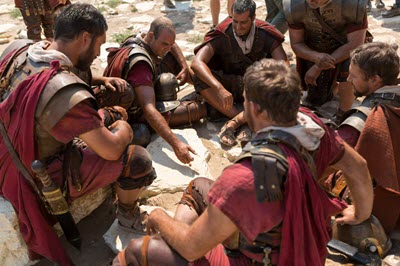
The gambling laws of the Roman Empire were laxer than during the Republic, especially when it came to actually enforcing them. Emperor Augustus, who ruled from 27 BC until his death in AD 14, loved gambling and was known to play during all Roman festivals. Before becoming Emperor Augustus, he – then known as Octavianus – spent many years as a military man. Together with Marcus Antonius and Marcus Lepidus he formed the Second Triumvirate to defeat Caesar’s assassins.
One example of Emperor Augustus great love of gambling can be seen in his letter to his son-in-law Tiberius, where he says that: “We have passed, my dear Tiberius, the feast of Minerva, in great merriment, gambling every day and warming up to the occasion. Your brother distinguished himself by the great noise he made, and, after all, he did not lose very much, for fortune turned in his favor just as he faced ruination. I have lost thirty thousand sesterces, because, as usual, I was liberal to my guests and partners. Had I taken all that was due to me I would have cleared fifty thousand.”
In Pompeii, the city buried under volcanic ash in 79 AD, one of the preserved taverns have a cartoon painted on the floor. The first picture shows two men seated on chairs, playing a board game. The first man, who has just threw the dice, says “EXSI” which means “I’m out”. The other man, who is pointing, says “NON TRIA DV AS EST” which means “no three points but two”. In the second picture, the men are now standing up, seemingly fighting each other, maybe over the score? The tavern keeper steps in and says “ITIS FORIS RIXSATIS”, i.e. “Leave my place if you want to fight”.
Most ancient roman games was very different from the casino games we play today. The Romans did not play roulette, poker or black jack. They did not do any type of financial betting. The only games that the Romans played that we would recognize as a casino game is different dice games.
When dice were cast in Ancient Rome, it typically involved three dice; not the two-dice combo that we are familiar with today for modern casino games such as Craps. Interestingly, the Ancient Romans did use the spotted six-sided dice type that is still the dice version most commonly used today. Also, the highest ranking throw was three sixes (18 spots), just like it is for us.
Dice games in Ancient Rome could generally be divided into two groups: those that were played with dice only and those that required a board and pieces. The latter group contained more complex games where the pieces on the board were moved based on the outcome of the dice. One common board configuration was to have 36 squares adorned with symbols such as letters, crosses and leaves. In some games, you had to pay a fine or move your piece backward if any of the dice displayed the side with the single dot.